How to Prevent Cavities Between Your Teeth
Cavities between teeth begin when plaque stays in a tight space and feeds on sugars and starches from food and drinks. The bacteria in plaque produce acids that gradually weaken enamel, and because the early changes can be hidden from view, prevention usually matters more than waiting for discomfort. At Lance D. Ogata, DDS, Inc. in Kahului, Dr. Lance Ogata helps patients build a daily routine that actually reaches these hard-to-see surfaces.
Why This Area Is Hard to Clean
A toothbrush cleans the broad, easy-to-reach surfaces of your teeth, but its bristles usually cannot reach the narrow contact point between two teeth. Food particles and plaque can remain there, especially when teeth are crowded or slightly rotated. Over time, repeated acid exposure may create decay on the sides of one or both teeth.
The gumline adds another challenge. Plaque can collect just below the point where the teeth touch, while rough fillings, bridges, retainers, or orthodontic appliances may create additional places for it to cling. Daily interdental cleaning helps disturb that buildup before it has time to mature.
Interdental Cavity Prevention Tips
The most useful approach to interdental cavity prevention is simple: clean between your teeth consistently, not only when something feels stuck. Floss, an interdental brush, or another dentist-recommended aid can reach areas a toothbrush misses. The right choice depends on the size of the spaces and the shape of your mouth.
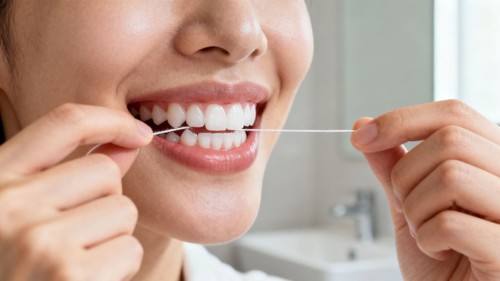
Slide floss gently between the teeth rather than snapping it down into the gums. Curve it around the side of each tooth in a C shape, then move it up and down to wipe the surface beneath the contact point. If the spaces are wide enough, an interdental brush may be easier to use — choose a size that fits snugly without forcing it. A short routine is easier to repeat when it has a clear order:
- Clean between every tooth, including the teeth at the very back
- Wipe both sides of each contact area instead of cleaning only where food is visible
- Use gentle pressure and stop if an aid repeatedly catches or causes pain
- Rinse or clean reusable interdental tools according to their instructions
Mild bleeding can occur when inflamed gums are first cleaned, but persistent bleeding, swelling, or tenderness deserves a dental check. The goal is comfortable, regular cleaning, not forcing a tool into a space that's too small.
Cavities Between Teeth: Common Causes
Cavities between teeth often come down to plaque, frequent acid exposure, and areas that are difficult to clean thoroughly. A sugary snack or drink doesn't automatically create a cavity, but repeated exposure gives oral bacteria more opportunities to produce acid. Saliva and fluoride help protect enamel, yet they cannot fully compensate for plaque that remains undisturbed.
| Habit or Exposure | Why It Matters | A More Helpful Adjustment |
|---|---|---|
| Frequent sugary drinks | Repeated sugar and acid exposure gives plaque more fuel | Keep sweet drinks with meals when possible |
| Sticky snacks | Food can linger around tight contacts | Choose less adhesive options and clean between teeth |
| Grazing all day | Teeth have fewer breaks between acid exposures | Create defined meal and snack times |
| Skipping fluoride toothpaste | Enamel receives less regular fluoride support | Brush twice daily with fluoride toothpaste |
No single meal determines your dental health, so avoid turning prevention into an all-or-nothing diet. Reducing how often teeth encounter sugar, drinking water between meals, and cleaning consistently are practical changes. If you have a history of repeated decay, ask your dentist whether your routine or fluoride use should be adjusted.
Signs of a Cavity Between Your Teeth
A cavity between teeth may not cause symptoms at first, which is one reason regular dental examinations are useful. Make an appointment at our Kahului office if cold, hot, sweet, or acidic foods trigger sensitivity that lingers after the food is gone. You should also seek dental advice for floss that repeatedly shreds or catches in one spot, a persistent bad taste, swelling, or a visible dark or chalky area. These signs don't prove that you have a cavity, but they warrant a professional look.
A dentist may examine the contact areas closely and use dental X-rays when decay is difficult to see directly. Do not wait for severe pain; deeper decay can eventually affect the inner part of the tooth and may require more involved treatment such as our Composite Fillings. If you have facial swelling, fever, trouble swallowing, or rapidly worsening pain, contact a dental professional promptly, since those symptoms can signal an infection rather than a minor sensitivity issue.
Building a Daily Routine That Prevents Cavities
A routine for preventing cavities between teeth doesn't need to be complicated. Brush twice a day with fluoride toothpaste, and clean between your teeth once a day using the method that fits your mouth. Doing these steps at a consistent time — often before bed — makes them less likely to be forgotten.
Give yourself enough time to reach the back teeth and the spaces that feel awkward. If flossing is difficult because of limited hand movement, crowded teeth, or dental work, ask a professional about another interdental aid rather than abandoning the step. According to MouthHealthy, the American Dental Association's consumer resource, even the best toothbrush can't fully cleanse the spaces between your teeth, which is why the ADA recommends cleaning between teeth once a day in addition to brushing twice daily for two minutes each time. Keep regular dental visits even when your teeth feel fine, since professional examinations can find changes that are hidden between teeth.
Conclusion
Preventing cavities between your teeth comes down to removing plaque from the spaces a toothbrush misses, limiting frequent sugar exposure, using fluoride, and paying attention to early warning signs. A steady daily routine and regular dental care can help protect these hard-to-see surfaces before a small problem grows. You can contact our Kahului office to schedule your next checkup.
Frequently Asked Questions
Can brushing alone prevent cavities between teeth?
Brushing is essential, but toothbrush bristles often cannot clean the tight spaces between teeth thoroughly. Add daily flossing or another suitable interdental cleaner to reach those areas.
How often should I floss to help prevent cavities?
For most people, cleaning between the teeth once a day is a useful goal. The best time is the time you can maintain consistently, although nighttime cleaning helps remove the day's buildup before sleep.
Is bleeding during flossing normal?
Gums that are irritated by plaque may bleed when you first begin cleaning between the teeth. If bleeding continues despite gentle daily cleaning, or occurs with swelling or pain, arrange a dental examination.
Can cavities between teeth heal on their own?
Very early enamel changes may sometimes be stopped or managed with professional guidance, fluoride, and improved cleaning. An established hole in the tooth does not repair itself and needs assessment by a dentist.
Does sugar-free gum prevent cavities?
Sugar-free gum can increase saliva flow, which may help clear food and dilute acids after eating. It does not replace brushing, fluoride toothpaste, or cleaning between the teeth.
When should children start cleaning between their teeth?
Begin when two teeth touch each other, since a toothbrush cannot clean the contact point effectively. A parent or caregiver usually needs to help until the child has the coordination to do it reliably.
About the Author
Lance D. Ogata, DDS, Inc. is located at 140 Hoohana St. Suite 301, Kahului, Maui, Hawaii. The practice is led by Dr. Lance Ogata, DDS, who earned his Biological Sciences degree from the University of Southern California and his Doctor of Dental Surgery degree from the University of the Pacific Dental School in San Francisco. Dr. Ogata is an active member of the American Dental Association, the Academy of General Dentistry, the Hawaii Dental Association, and the Maui County Dental Society, where he served as Past President in 2010. The practice also includes Dr. Peter Kim.
Medical Disclaimer
The information provided in this article is for educational purposes only and does not constitute professional medical or dental advice, diagnosis, or treatment. Whether a cavity has developed between your teeth can only be determined through an in-person dental examination. Always seek the advice of your dentist or other qualified health provider with any questions regarding a dental condition. Never disregard professional advice or delay in seeking it because of something you have read here.
Blog Post Author

Contributed by DentalROI
DentalROI provides relevant dental content to help providers educate patients. The statements, services, and products referenced in this article have not been evaluated by the Food and Drug Administration, and they are not intended as a substitute for professional medical advice, diagnosis, or treatment. Always seek the advice of your dental provider with any questions or issues you may have. Specific recommendations may vary in different circumstances, so individual consultation is important.